German manufacturing companies are under high pressure. Costs are rising, supply chains remain demanding and qualified specialists are difficult to find. At the same time, more and more companies are recognizing the opportunities offered by data-based production processes.
AI in manufacturing is therefore no longer an issue of the future. It is becoming a practical tool for making better use of existing plants, reducing waste and making decisions more quickly.
Many companies are now realizing that classic production models are reaching their limits. Increasing energy costs, fluctuating demand and international competition are further increasing pressure.
Anyone who invests in data-based processes today creates the basis for long-term competitiveness. German SMEs in particular can benefit from intelligent production systems.
Which technologies are changing manufacturing
Key technologies include machine learning, image processing, digital twins, sensors, robotics, and intelligent control software.
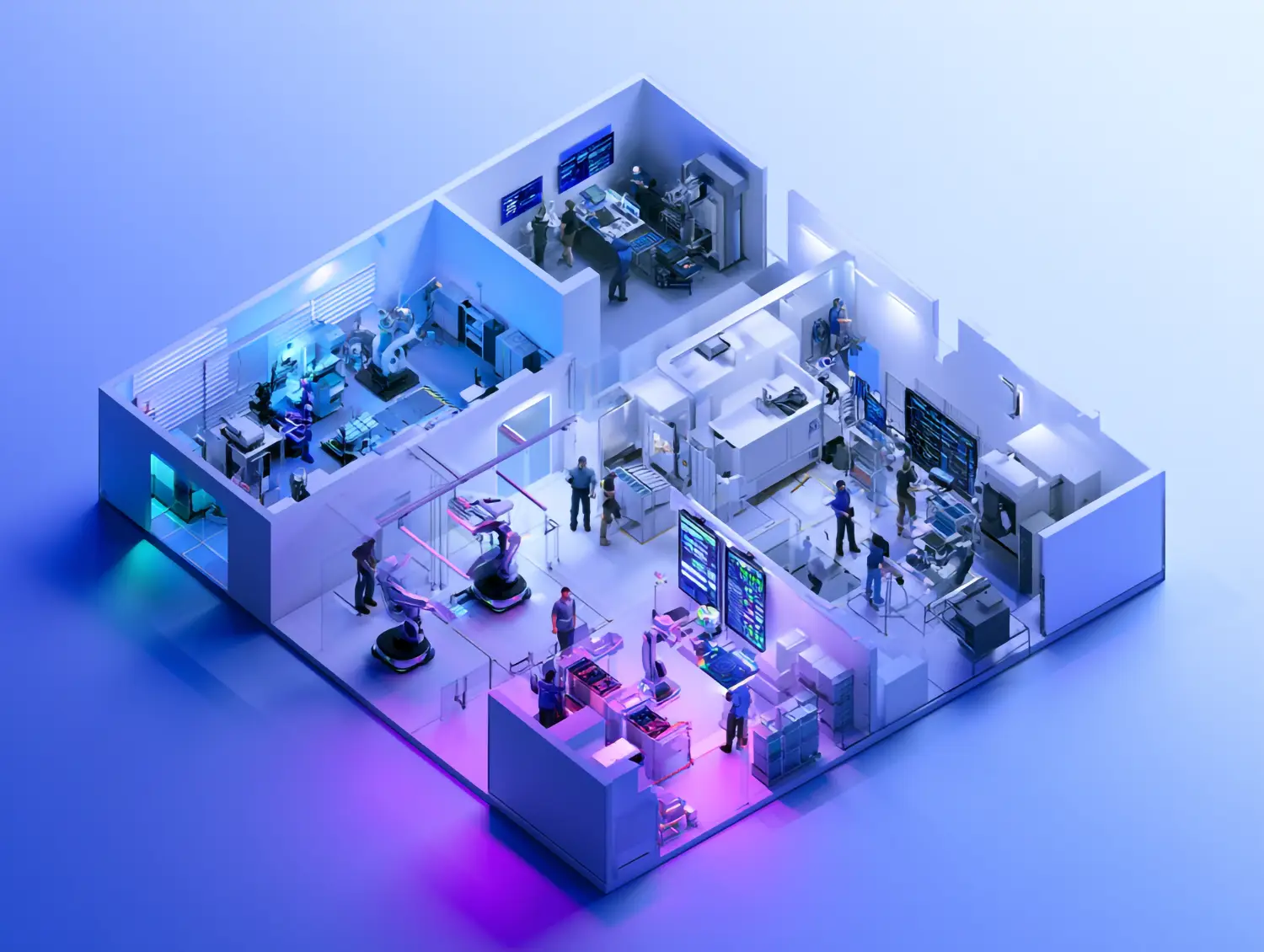
A digital twin virtually represents machines, systems or processes. This allows companies to simulate, analyze and optimize production processes before changes are implemented in real manufacturing.
This is particularly interesting when it comes to complex production lines. Changes can first be tested virtually before they are implemented in real production.
This reduces risks, downtime and unnecessary costs. At the same time, valuable data is generated for future optimizations.
Predictive maintenance in practice
Predictive maintenance is a particularly important area of application. Sensors measure vibrations, temperatures, or pressure values on machines. AI analyses this data and detects potential defects at an early stage.
As a result, unplanned outages can be reduced. Maintenance is no longer carried out after fixed intervals, but exactly when it is really necessary.
This creates a major economic advantage, especially in production environments with high downtime costs.
Many manufacturing companies are already using these systems to reduce maintenance costs while extending the life of their machines.

Automatically ensure quality
In quality assurance, AI can evaluate camera images, measurement values and production data in real time. As a result, errors are identified more quickly than with purely manual tests.
This is particularly valuable for large quantities, complex components or tight tolerances. Even the smallest deviations can be identified automatically.
Many companies use intelligent image processing systems for this purpose. They compare components with reference data and identify faulty products within a few seconds.
This not only reduces waste. Complaints and reprocessing costs can also be significantly reduced.
Start automation sensibly
Getting started with AI projects doesn't have to start with a complete rebuild. In practice, a gradual approach has proved particularly effective.
A realistic timetable often looks like this:
- Analyze existing processes
- Identify bottlenecks
- Select pilot project
- Check data quality
- Train employees
- Measure results
- Scale successful solutions
In this way, the financial risk remains manageable. At the same time, companies are gaining practical experience with AI systems early on.
Projects with clearly defined goals are particularly successful. This includes, for example, less waste, reduced downtimes and better production planning.
Why people remain indispensable
AI changes tasks, but does not make skilled workers superfluous. Employees are increasingly becoming process supervisors, data interpreters and decision makers.
Human experience remains decisive, especially in unforeseen situations. AI can recognize patterns, but it can't fully understand every operational feature.
Continuing education is therefore becoming increasingly important. Companies need employees with skills in data analysis, process understanding and digital management.
Particularly successful companies invest in training and qualification measures at an early stage. This creates acceptance for new technologies and, at the same time, valuable internal know-how.
Data as the basis for AI in manufacturing
AI won't work reliably without high-quality data. Machines must provide relevant information and systems must be able to communicate with each other.
Many companies underestimate this point. Data is often available, but it is not neatly structured or not linked to each other.
That's why a solid data strategy is crucial. Only then can AI models be sensibly trained and used productively.
If you want to automate successfully in the long term, you therefore need a stable digital infrastructure and clear processes for using data.
This is how successful implementation is achieved
The most important success factor is a clear business case. Companies shouldn't start with technology, but with a specific problem.
Typical questions include:
- Why do shutdowns occur?
- Where is scrap created?
- Which maintenance costs can be reduced?
- Which processes cause a lot of manual effort?
- Where is real-time data missing?
These questions result in concrete AI projects with measurable benefits.
Close cooperation between production, IT and management is also important. Only when all areas work together on solutions can sustainable results be achieved.
Opportunities for SMEs
Medium-sized manufacturing companies in particular benefit from AI when they proceed pragmatically. Many solutions can now be modularly integrated into existing systems.
As a result, companies do not have to immediately replace their entire infrastructure. Even minor optimizations can achieve big effects.
Particularly in the areas of maintenance, quality control and production planning, fast results are often achieved with manageable effort.
Anyone who starts small and gains experience creates a stable basis for long-term digitization.
More efficiency with a clear strategy
AI in manufacturing can significantly improve quality, maintenance, material flow, and planning. However, clean implementation with realistic goals is crucial.
The technological basis is available today. It is now important to implement specific use cases sensibly and to actively involve employees.
The KI Company helps companies identify suitable AI use cases, set up projects in a structured way and bring employees along.
Anyone who wants to use AI sensibly in manufacturing can get non-binding advice at any time.
Common questions about AI in manufacturing
What does AI mean in manufacturing?
AI in manufacturing means that production data is analyzed with artificial intelligence to improve processes, identify errors and support decisions.
What are the benefits of AI in production?
The most important benefits are fewer downtimes, better quality, more efficient maintenance, optimized planning and lower resource consumption.
Does every company need a digital twin?
No A digital twin is particularly useful for complex systems, high downtime costs or highly networked production processes.
Does AI replace skilled workers in manufacturing companies?
No AI supports professionals by analyzing data and preparing routine decisions. Responsibility, experience and problem solving remain with people.
How do you start with AI in manufacturing?
Preferably with a clearly defined pilot project, a good database and a measurable goal, for example less waste or fewer unplanned outages.