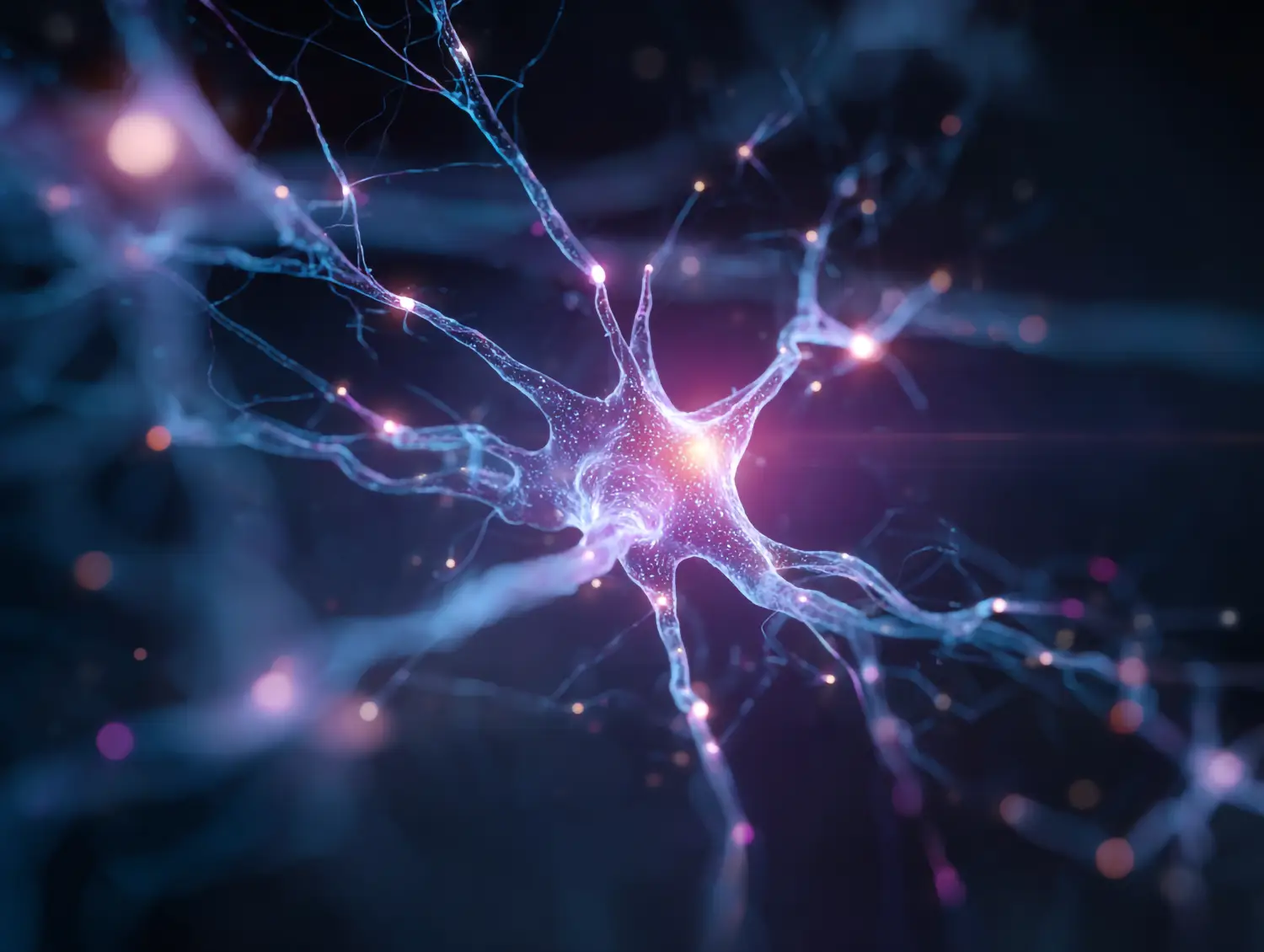
Neural networks are among the most important technologies of modern artificial intelligence. They enable computer systems to recognize patterns, analyze data, and learn from information on their own.
Neural networks are becoming increasingly important for companies, particularly as a result of progress in the area of AI. Applications such as voice assistants, image recognition, chatbots or automated analyses would hardly be possible today without neural networks.
Companies use this technology to make processes more efficient, evaluate large amounts of data and set up intelligent automations.
- Recognize patterns and relationships
- analyze large amounts of data
- Automate processes
- Improve forecasts
- Develop intelligent AI systems
What are neural networks?
Neural networks are AI models that are based on the human brain. They consist of interconnected artificial neurons that process and pass on information.
The goal of neural networks is to learn from data and to recognize patterns independently.
A neural network processes information in several layers:
- input layer
- hidden layers
- output layer
Each layer analyses data and passes results on to the next level.
As a result, neural networks can also recognize complex relationships within large amounts of data.
How do neural networks work?
Neural networks analyze data using mathematical models and weightings.
During the training process, the system processes large amounts of sample data and continuously adapts its internal connections.
This improves the accuracy of the results step by step.
For example, the system learns:
- Recognize images
- Understanding language
- Analyze texts
- Predicting patterns
- Prepare decisions
The more high-quality training data is available, the more powerful the neural network becomes.

Why neural networks are so important for AI
Many modern AI applications are now based on neural networks.
These systems are particularly powerful for complex tasks that would be difficult to solve with classic rules.
These include, for example:
- image recognition
- speech processing
- translations
- autonomous systems
- Predictive analytics
- generative AI
Neural networks therefore form the technological basis of many modern AI solutions.
What types of neural networks are there?
Depending on the area of application, different types of neural networks are used.
Feedforward networks
Feedforward networks are among the simplest forms of neural networks.
Information is only processed in one direction — from input to output.
These models are commonly used for:
- simple forecasts
- classifications
- pattern recognition
They are particularly suitable for structured data analyses.
Recurrent neural networks
Recurrent neural networks can incorporate information from previous steps.
This makes them particularly suitable for:
- speech processing
- text analyses
- Time series analyses
- translations
The system can recognize relationships over longer processes.
Convolutional Neural Networks
Convolutional neural networks, or CNNs for short, are primarily used for image and video analyses.
They recognize visual patterns particularly efficiently.
Typical areas of application are:
- facial recognition
- Quality control
- medical image analysis
- autonomous driving
CNNs are among the most important technologies of modern computer vision systems.
Deep learning networks
Deep learning is based on particularly deep neural networks with many processing layers.
As a result, very complex patterns can be analyzed.
Deep learning is used, among other things, for:
- generative AI
- language models
- intelligent assistants
- autonomous systems
- Real-Time Analytics
Many modern AI applications are now based on deep learning architectures.
How neural networks are trained
For neural networks to deliver precise results, they must be trained.
The model processes large amounts of training data and continuously adjusts its weightings.
The training process usually includes:
- data collection
- data preparation
- Model training
- Failure analysis
- optimization
- validation
The aim is to generate forecasts or analyses that are as accurate as possible.
The better the data quality, the more reliable the model works.
Areas of application of neural networks
Neural networks are already being used in numerous industries today.
Neural networks in marketing
In marketing, neural networks analyze user behavior and customer interactions.
This allows companies to:
- Create personalized content
- Optimize campaigns
- Analyze target groups
- Predict purchase probabilities
As a result, marketing decisions are significantly more data-based.
Neural networks in industry
In production, neural networks support the analysis of machine data and production processes.
As a result, companies can:
- Identify quality issues
- Optimize maintenance
- Reduce production errors
- Automate processes
There are major benefits, particularly in the area of predictive maintenance.
Neural networks in healthcare
Neural networks also play an important role in the healthcare sector.
For example, they help with:
- Image diagnostics
- pattern recognition
- medical forecasts
- Analyzing large research data
This allows diagnoses and medical analyses to be supported more efficiently.
Neural networks in finance
Banks and financial service providers use neural networks for, among other things:
- Fraud detection
- risk assessments
- market analyses
- forecasting models
As a result, large amounts of data can be analyzed more quickly.
What are the benefits of neural networks
Neural networks offer companies numerous advantages.
This includes:
- more precise analyses
- automatic pattern recognition
- better forecasts
- intelligent automation
- higher scalability
- faster data processing
The ability to recognize complex relationships within large amounts of data is particularly valuable.
This creates new opportunities for data-driven decisions and AI-based business models.
Neural network challenges
Despite the benefits, there are also challenges.
This includes:
- high computing power
- large amounts of data
- complex training
- Data protection requirements
- lack of transparency
- high development costs
Data quality in particular determines how reliably neural networks work.
Companies therefore need a stable database and clear AI strategies.
Why neural networks are shaping the future of AI
Neural networks are currently developing rapidly and form the basis of many modern AI systems.
Generative AI, autonomous systems and intelligent assistants are particularly driving this development forward.
In the future, neural networks will help even more:
- to automate processes
- to support decisions
- Evaluate data intelligently
- solving complex problems
As a result, they are changing numerous business areas and digital processes in the long term.
Why neural networks are strategically relevant for companies
Companies that make good use of neural networks can make processes more efficient and build data-based competitive advantages.
Technology is increasingly evolving from a research topic to a practical tool for everyday business life.
The KI Company helps companies identify suitable AI use cases and successfully integrate neural networks into existing processes.
Common questions about neural networks
What are neural networks?
Neural networks are AI models that process information in a similar way to the human brain and learn from data.
What are neural networks used for?
Neural networks are used for image recognition, speech processing, forecasts and intelligent automation, among other things.
What is the difference between AI and neural networks?
Artificial intelligence is the generic term. Neural networks are a special technology within AI.
Why do neural networks need large amounts of data?
Neural networks learn from sample data. The larger and more high-quality the data base is, the more precise the results become.
What is the role of deep learning?
Deep learning is based on deep neural networks with many processing layers and enables particularly complex AI applications.